Abelia Bush Care - How To Grow And Care For Abelia
The abelia bush is a versatile landscaping institute that you tin use for borders, hillsides, or even grow in containers. Few ornamental bushes can tick and then many decorative boxes while remaining easy to grow and maintain. Merely that'southward the beauty of abelia.
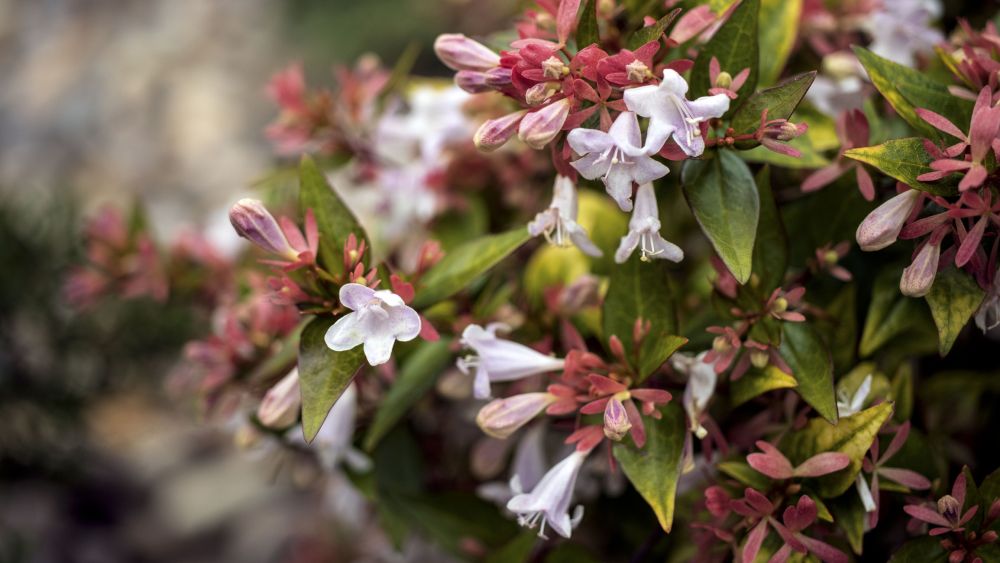
And all-time of all, abelia has enough of varieties and hybrids that requite y'all a lot of options when designing your landscapes. You tin can grow information technology every bit a foundation in a border or plant it as a focal point. As for the dwarf types, they fit snugly in minor containers and flourish in patios, gazebos, and to punctuate the angles of the deck.
If y'all're new to the abelia world, this article gives you comprehensive coverage of the basics of growing the bush, tips of landscaping, and which varieties fit where in your garden.
Abelia at a Glance
A native of Japan and Mexico, abelia is a hardy shrub with a loftier tolerance for different types of soil and conditions conditions. They grow in zones four to xi. To say that the ornamental shrubs are understated is in itself an understatement. For all their beauty and versatility, they accept failed to catch on. Many gardeners and landscapers have never tried or even heard of them.
With most 30 species and hybrids, you're spoilt for options. Abelia comes in different sizes and shapes. From the iii-foot dwarf to the xviii-foot giant bush, each hybrid has its unique properties.
But that's not even one-half the story. As well the many varieties, the abelia has pleasant foliage and the bloom time is counted in months rather than in days. As for the leaves, they range from bright green to gold and purple. Most often the leaves beginning as light-green then change color throughout the seasons.
The flowers are unremarkably bell-shaped and either white or pink. Each blossom is nearly 2 inches long but since they grow in clusters, they catch your eye from a distance. Not to mention their potent and exhilarant fragrance that wafts about the garden and enters through an open window. Usually, the flowers open up in the late spring and remain in bloom through the summer and early fall.
Abelia Varieties
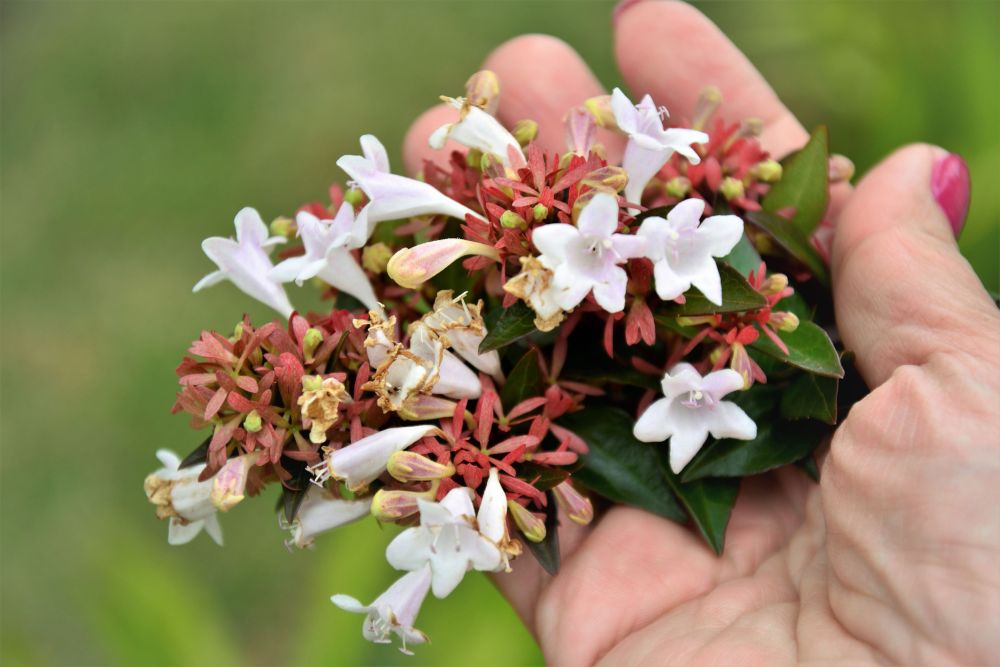
Not all abelian varieties are suitable for all occasions and settings. For hedging purposes, you'll demand a medium-size abelia unless you accept a large mural. If you're growing it on a gradient or hillside, then the larger varieties will do best. Here are the top 5 abelia species to grow.
- Kaleidoscope Abelia: As the name implies, this versatile bush offers dissimilar colors with every flavor change. In the spring, the lush foliage is light-green. It morphs into gold in the summer before ending as fiery red in the fall. It averages 3 feet at maturity and its tiny flowers are white. Employ it for a small hedge or as a groundcover.
- Abelia Grandiflora: Grows to about six feet then utilise it for a loftier hedge. The leaves are bright green with a glossy sheen. This is why this bush-league is often called the "glossy abelia". The flowers are white and minor and flower from late spring until early on fall. It attracts many pollinators throughout the summertime.
- Edward Goucher Abelia: A medium-size hybrid that averages between iii to 5 feet high and broad. The stunning leaf starts in the spring with a bronze tinge that vanishes in the summertime. The summer besides brings well-nigh lilac flowers that remain in bloom until the terminate of summer.
- Abelia Sunshine Daydream: A fitting name for a bush-league that offers colors in threes. In the spring the foliage is pinkish, white, and dark-green. It chop-chop develops into yellow and green in the summer before settling into cherry hues in the fall and winter. The flowers are white and fragrant and stay in flower throughout the summer.
- Abelia Rose Creek: This bush starts glossy green in the spring and ends bronze in the autumn. Simply the species gets its proper name from its flowers. The flowers are white with hints of rosy blushes. It grows to 4 anxiety loftier and the same in width. You lot can abound it in a container with regular pruning to proceed it compact.
Landscaping with Abelia
Experts recommend using abelia for different designs and ornamental purposes. If this is your outset experience with this bush, here are a few tips to guide you along the way.
- Apply abelia as a living fence to divide walkways from the rest of the garden.
- Break your landscape down into small gardens with the assist of abelia hedges.
- Dwarf abelias are keen as potted plants near the entrance, the patio, or the deck. Their fragrance will keep your summer evenings lively.
- Plant it near vegetable and fruit patches to attract pollinators such as hummingbirds, bees, and butterflies.
- Use them as backdrops for more showy annual flowers.
- Mix medium-size abelias with small trees to create unique hedges and borders.
How to Abound Abelia
When it comes to growing a bush-league or a tree for that thing, it'southward ever best to start with a young sapling. Fifty-fifty if you have the seeds, the abelia hybrids are quite unpredictable. You lot sow the seeds of a bush-league just end upward with a totally different abelia that looks nothing like its parent. Once yous have the young sapling from the local nursery, y'all're ready to start.
- Start the abelia in the spring when the soil temperature is to a higher place 60 degrees Fahrenheit and the threat of the final frost is over.
- Suspension the acme 12 inches of soil and mix in a skilful portion of aged manure to enrich the soil.
- Dig a pigsty in the tilled soil that matches the depth of the root ball of the sapling and is twice as wide.
- Ease the sapling out of the tarp or packaging it came in and inspect the roots. Ruffle them and trim off whatsoever damaged roots.
- Constitute the sapling in the hole making certain the soil line aligns with the surface of the hole. Spread the roots then that they fill the pigsty.
- Backfill the hole halfway and pack the soil firmly and then that the abelia stands on its own upright.
- Water the sapling thoroughly to help the soil settle.
- Fill the residue of the hole with soil and build a berm around it to concord the water.
- H2o the plant again and fill up the berm.
- Encompass the soil with a three-inch layer of mulch. Wood chippings or discarded leaves will do.
Abelia Intendance
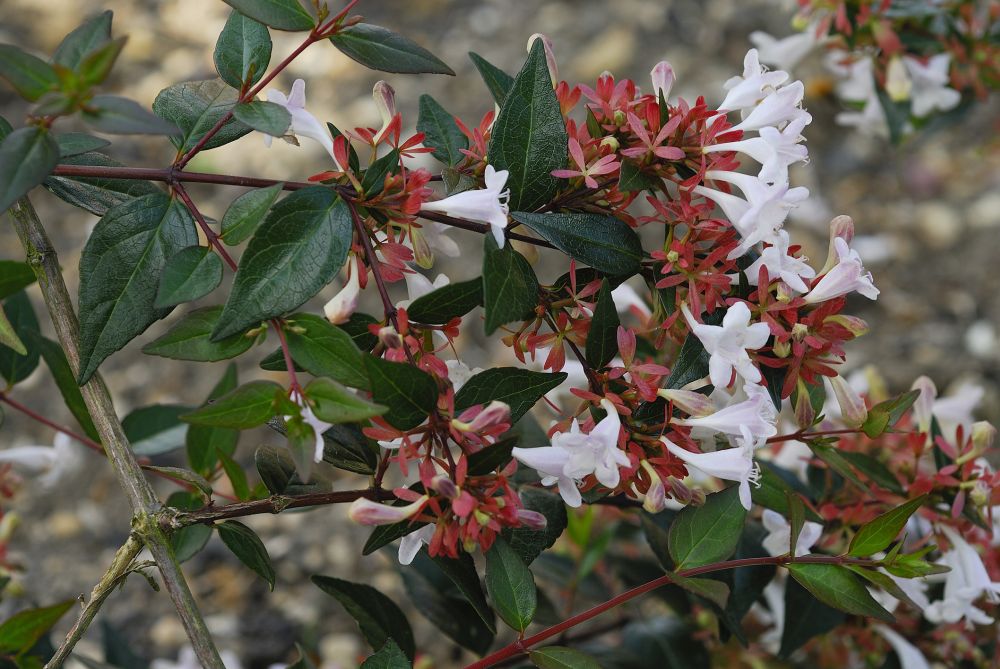
1 highly-seasoned quality most abelia is that they need minimum care and one time established get quite independent. If you don't accept much fourth dimension for maintaining the abelia, information technology won't complain or show signs of stress. Except for pruning which is a must for all abelia types and varieties.
Soil
In most cases, yous'll demand to amend the soil in the garden to arrange the rather demanding abelia. If the soil is clayish and heavy, and then yous'll need to add organic materials to loosen it upwardly. The best options here are sand or a potting mix. Add together the organic materials to the clay at a ratio of one:2. If the soil is sandy and not likely to retain h2o, so you'll need to meliorate it with peat moss or compost at the same ratio. As for the pH levels, abelia tin can thrive in a broad range of levels from 5.0 to 7.five. It is still worth your while to exam the soil pH and bring information technology to the desired levels.
Water
The h2o needs of abelia vary as the bush grows and establishes. The newly transplanted sapling will need watering almost every day. The soil needs to be evenly moist to avert putting the plant under a lot of stress. Equally the bush establishes, then cut back the watering by half. On average it needs about one inch of water a calendar week during the offset twelvemonth. This amount will get less and less with every passing twelvemonth. A mature abelia tin can withstand slightly dry soil where the peak 3 inches of the soil are dry. Excessive and prolonged drought tin take adverse effects on the bush.
Fertilizing
For all their lush light-green foliage and fragrant blooms, abelia bushes are non heavy feeders. If yous get-go them in rich soil with enough of organic materials, they about likely would need no further fertilizing during that first year. But you wouldn't want to starve your bush. And so side wearing apparel with organic compost and liquid fertilizer to keep the flowers blooming their brightest. Apply the fertilizer once every 4 to 6 weeks during the growing season. Beginning in the early on bound and continue fertilizing until the finish of summer. Once the flowers have faded, hold off fertilizing until the next spring.
Pruning
As versatile as the abelia bush-league is, pruning must be customized to fit the purpose of the bush. If you're growing it as a hedge constitute then pruning will exist different from a bush growing on a gradient or one in a container. Here are the primary pruning abelia types based on the purpose and location of the bush.
Hedges
A hedge abelia has to expect not bad and in shape all the fourth dimension. Otherwise, they'll reduce the adjourn appeal of your lawn and plow the landscape into a scene from a post-apocalyptic flick. How many times you demand to prune the bush-league depends on how vigilant you are. You'll need to use hedge trimmers about three times during the spring and summer. Fast-growing bushes might need another trimming before the growing season is over.
Winter Pruning
This is an annual upshot for all types and abelia hybrids. Push button it every bit far back into the winter as you tin. The goal is to untangle branches that grow as well close or cross each other. Remove damaged and broken branches and trim off runaway branches. You can utilise shears for this pruning. It's meant to trigger new growth once jump arrives. So cut dorsum the bush to its bones skeleton shape.
Rejuvenating Pruning
Abelia ages much similar any other living thing. An aged abelia loses much of its luster and grows less foliage and fewer blooms as the years pass. So to encourage the bush-league to regain some of its youthful vigor, you demand to intervene with your trusty shears. Start in the late wintertime when the bush is dormant and don't spare whatever branches, erstwhile or new. The thought is to cut back the old bush to near half-dozen inches above the ground. Past relieving it of its ancient frame, you trigger the bush-league to take a fresh showtime and become rejuvenated.
Source: https://www.diys.com/abelia-bush/
0 Response to "Abelia Bush Care - How To Grow And Care For Abelia"
Enviar um comentário